About us
In 1961, the Côte d’Ivoire Department of Statistics and Economic Studies set up a training school. Initially, this establishment was limited to the training of civil servants in the Statistical Technical Agents corps, recruited through a professional competition among the department’s clerks, or through a direct competition open to candidates holding the BEPC. That same year, the school welcomed students from Côte d’Ivoire’s neighboring French-speaking countries.
Its scope of recruitment then expanded to MADAGASCAR in 1964, Senegal in 1967, and progressively to the countries of Central Africa: République Populaire du CONGO in 1966, GABON in 1967, RWANDA in 1968, Central African Republic and Chad in 1969, Republic of Zaire in 1970.
In 1969, the school even welcomed a student from the French territory of AFARS and lSSAS (now the Republic of DJIBOUTI), and in 1971, one from the Comoros Archipelago.
In 1963, the École d’Application was renamed the École de Statistique and became an educational establishment under the direct authority of the Minister of Finance, Economic Affairs and Planning. Its vocation was broadened to include the 2-year training of higher-level executives known as “Chefs de Travaux”. Today, the school offers the ITS (Ingénieur des Travaux Statistiques) course, which has undergone a number of reforms designed to improve the level of training provided.
In 1968, the School experienced a further expansion with the creation of another corps of statisticians: the Adjoints Techniques de la Statistique.
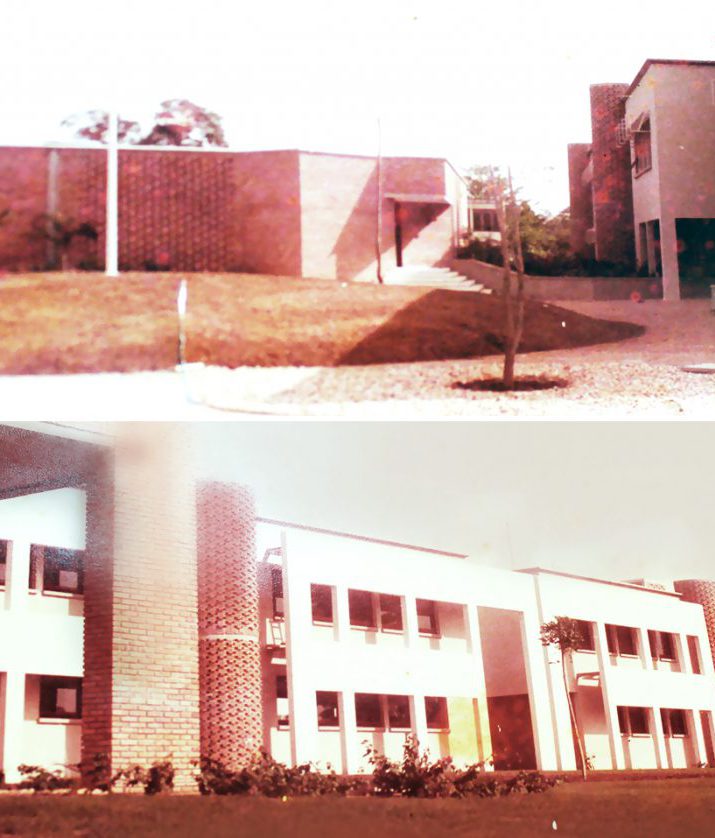
In 1982, decree no. 82.219 of March 3, 1982 extended the School’s objectives to include the training of statisticians at the highest level, the ISE (Ingénieur Statisticien Économiste) stream. This same decree gave the school the name “École Nationale Supérieure de Statistique et d’Économie Appliquée”, ENSEA.
In 1984, ENSEA signed an agreement with Niger’s INS to open a training program for statistical technicians and senior technicians in Niamey.
In 1987, the École opened a training program for Economic Statistical Engineers (ISE), previously delivered by the CESD in Paris.
A new program was launched at the start of the 2002-2003 academic year.
This is the Diplôme d’Etudes Supérieures Spécialisées en Analyses Statistiques Appliquées au Développement (DESS-ASAD). This program is organized in partnership with the Université de Cocody (Abidjan) and the Université de Versailles Saint-Quentin-en-Yvelines (France).
In 2005, ENSEA signed an agreement with Burkina Faso’s INSD to open a training course in Ouagadougou for statistics technicians and senior technicians at the Ecole Nationale des Régies Financières.
Also in 2005, ENSEA was awarded the “UEMOA Regional Center of Excellence” label.
In 2008, at the request of Niger’s INS, ENSEA opened a special advanced training cycle for two classes of Statistical Technical Assistants.
After one year’s training, the graduates of this cycle were reclassified as Statistical Engineers within Niger’s statistical system.
In 2010, ENSEA signed an agreement with Madagascar’s INSTAT to open a training cycle for statistical technicians and senior technicians in Antananarivo.
In 2015, the World Bank awarded ENSEA the label of African Center of Excellence for statistical training.
Since 2017, the school has been offering new training courses, namely:
- Master’s degree in agricultural statistics,
- Master in Actuarial Science,
- Master in data science
- Master in Management
- Doctoral training.
Since its creation, rigor and diligence have always characterized the school.
On August 04, 2017, on the occasion of the national day of excellence the President of the Republic awarded him the prize for the most modern public administration in Côte d’Ivoire. This award was celebrated on the occasion of the first edition of the Day of Excellence and Merit in the presence of Madame KABA NIALE, Minister of Planning and Development.
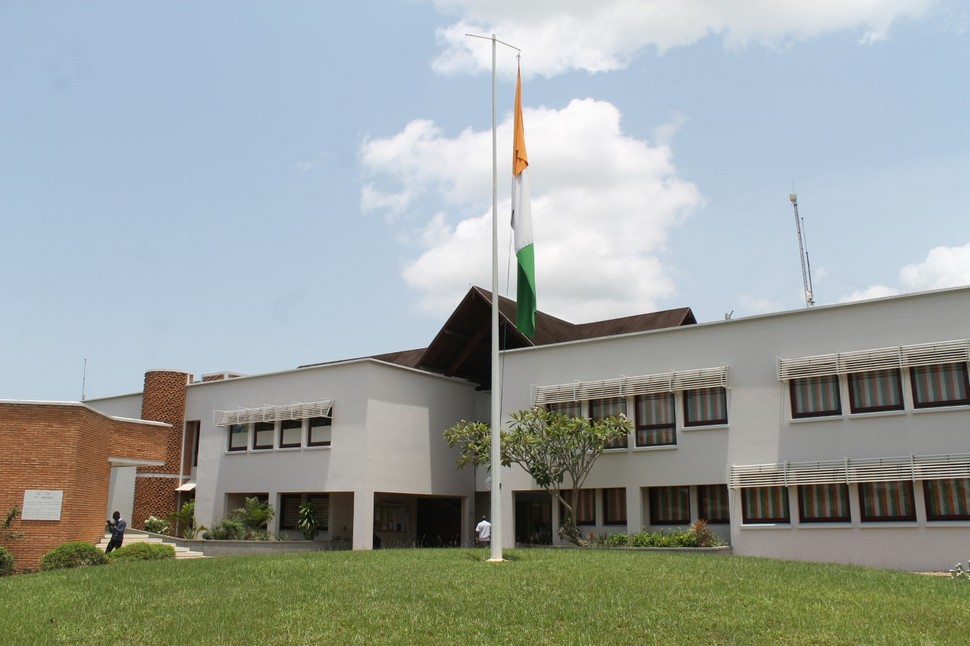
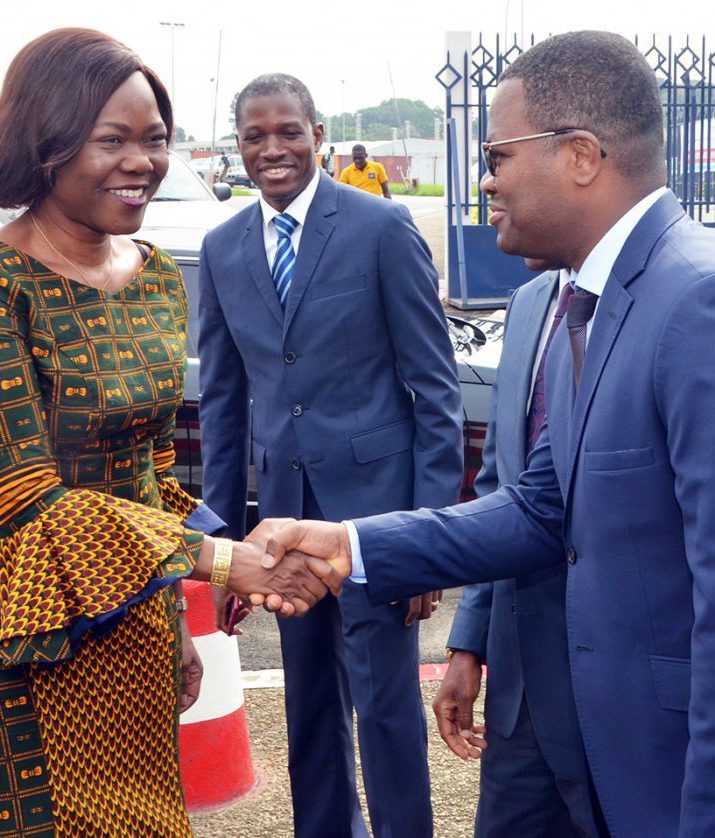
In 2018, ENSEA opened a doctoral program within the Unité Mixte de Recherche et d’Innovation (UMRI) Statistique et Economie Appliquée (UMRI-SEA). The school organized the first edition of the International Conference on Statistics and Applied Economics (CISEA), which brought researchers from all over the world to ENSEA. Since then, the CISEA has become the annual meeting place for African researchers on relevant research topics. It is usually held in June of each year, sometimes alternating with summer universities.
2019 saw the international accreditation of the ISE program by the Commission des Titres des Ingénieurs, with the Eur-Ace Label for the period 2019-2025. The same year saw the completion of work on the Research and Cooperation Building.
In 2020, ENSEA embarked on a process of pedagogical renovation of its training courses, with the opening of the Statistical Analyst course and the organization for the last time of the ITS and AD competitive entrance exams.
2021 confirmed ENSEA’s maturity at all levels. The school celebrated its sixtieth anniversary with a number of scientific and research activities:
- The organization, for the first time in sub-Saharan Africa, of the Africa Summer School in Econometrics (ASSE 2021).
- The organization of the African Conference of the Econometric Society, a prestigious continental event for economists worldwide.
- The organization of ENSEA’s first doctoral days.
The year 2021 marked the joint christening of all training courses with the name of their sponsor, HE Prime Minister Patrick ACHI.
Why study at ENSEA
Internationally recognized diplomas
A guaranteed career profile after training
A school where language is no barrier to learning
A guaranteed career profile after training
Vision
ENSEA’s enduring vision is to be an internationally renowned center of excellence for training and research in statistics and applied economics at the service of economic and social development in Africa.
Mission
Training statisticians and economists
Skills adapted to the changing needs of the job market
Ensuring capacity building
national statistical systems, business and civil society
Contribute to applied research
In the field of statistics, economy and population
Promoting statistical knowledge and culture
in all areas