AFSS
AFRICAN SUMMER SCHOOL
Speakers
AFRICAN SUMMER SCHOOL (AFSS 2025)
May 23-28, 2025
The African Summer School (AFSS), 2025 is organized by the Ecole Nationale Supérieure de Statistique et d’Economie Appliquée (ENSEA) from May 23 to 28, 2025, and will bring together students, young professors and research professionals from African and foreign institutions.
Important dates for applications:
- Start of Call for Entries: January 27, 2025
- Deadline for applications: March 10
- Admission decision: March 24
- Registration deadline: April 14
Confirmed speakers
Confirmed speakers include :
- Clément de Chaisemartin (Sciences Po), Moussa Richard Kouamé (ENSEA);
- Heitor S. Pellegrina (University of Notre Dame); Romaric Coulibaly (ENSEA)
- Tavneet Suri (MIT), Salifou Coulibaly (ENSEA).
Organizing Committee
- Co-Chairman Hugues Kouadio (Director of ENSEA);
- Co-Chairman Doko Tchatoka (University of Adelaide);
- Member Romaric Coulibaly (ENSEA)
Financial Support
Financial support will be available for young African researchers and students who submit a competitive application. This financial support will partially cover travel and accommodation or registration fees. Requests must be made at the time of application.
For further information, please write to us at: afss2025@ensea.ed.ci
Consult the AFSS 2025 program
HotelsHotels: All participants supported by ENSEA will be accommodated in hotels close to ENSEA (see list on the conference website), located in the Commune of Cocody within a 10-minute drive. An overnight rate will be negotiated for all participants staying in these hotels.
Please consult the list of hotels.
NB: For room reservations, please send an e-mail to the hotel via the focal point e-mail address, indicating the code in the e-mail:
How to get there
The conference will take place over the two days at ENSEA in Abidjan.
The Ecole Nationale Supérieure de Statistique et d’Economie Appliquée (ENSEA) is located in the Commune of Cocody on boulevard Mitterrand, avenue des grandes écoles.
Location: https://goo.gl/maps/Lo5qoWvdYnA9Y9tu6
The means of transport to get there are:
communal cabs
private vehicle rental companies
For further information, please send an email to: afes2024@ensea.ed.ci
Participation fees
Registration includes:
Participation in scientific activities
Lunches
Coffee breaks
Gala dinner
Registration does not include accommodation or transport.
Visa
All participants coming from countries where there is an embassy of the Republic of Côte d’Ivoire are strongly encouraged to obtain their visa in their country before departure. If not, apply for your visa online (Contact e-visa airport: (00225) 05 54 36 29 15 available 24/24 – France). https://snedai.com/e-visa/
After registration and online payment of fees, a biometric e-visa is issued on arrival at Abidjan international airport. The visa is valid from 1 to 3 months. Participants arriving in Côte d’Ivoire must go through the usual police and customs formalities. In addition to travel documents (passport, visa or identity card for nationals of UEMOA countries), you must have your vaccination booklet with you. Only the yellow fever vaccine is compulsory. NB: Participants must have the Conference invitation letter with them.
Travel information
Means of transportFor all other journeys, use orange-colored metered cabs or VTCs such as Uber, Yango or Heetch.
HotelsHotels: All participants supported by ENSEA will be accommodated in hotels close to ENSEA (see list on the conference website), located in the Commune of Cocody within a 10-minute drive. An overnight rate will be negotiated for all participants staying in these hotels. Please consult the list of hotels.
Conference venueConference venue: The Ecole Nationale Supérieure de Statistique et d’Economie Appliquée (ENSEA) in Abidjan is located in Cocody, Avenue des Grandes Ecoles. During the conference, an ENSEA bus will provide transport from Hotel-ENSEA-Hotel (Hotel departure: from 7:30 am – ENSEA departure: 6:30 pm).
LanguageConference proceedings will be conducted in French and English.
CommunicationCommunications at the hotel are relatively expensive. You can also buy a local chip for 500 FCFA or 1,000 F CFA depending on the operator (see stand at the airport). Telephone operators offer mobile and/or data packages.
Area code: +225
Electrical current: 220-230 V, 50-60 Hz. (Bring an adapter if possible).
CurrencyThe local currency is the CFA Franc (1 Euro = 655.957 F CFA). International credit cards are accepted by most banks in Abidjan. 24-hour cash dispensers are readily available in town. Traveler’s checks are accepted by the main banks in Abidjan.
HealthThe ENSEA infirmary will be available to administer first aid in the event of illness.
Climate and local time:
Local time: Greenwich Mean Time (GMT)
Climate: The rainy season lasts from May to July and the short rainy season from October to November. The climate is pleasant but humid. A sub-equatorial climate characterized by low temperature ranges (25°C to 30°C), high humidity (80 to 90%) and abundant rainfall, reaching 1,766 mm3 in Abidjan. This zone has two dry and two wet seasons. The long, hot dry season is interspersed with a few rains and extends from December to April. The short dry season covers August and September.
Sightseeing
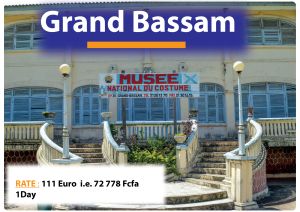
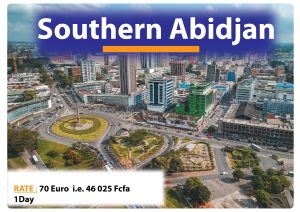
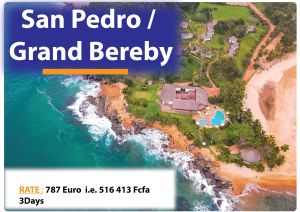
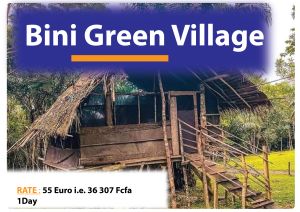
Discover Grand Bassam Discover Abidjan sud Discover San Pedro

The African Summer School (AFSS), 2025 is organized by the Ecole Nationale Supérieure de Statistique et d’Economie Appliquée (ENSEA) from May 23 to 28, 2025, and will bring together students, young professors and research professionals from African and foreign institutions.
Important dates for applications:
- Start of Call for Entries: January 27, 2025
- Deadline for applications: March 10
- Admission decision: March 24
- Registration deadline: April 14
The African Summer School (AFSS) 2025 will cover the following topics:
Topic 1. The role of technology in the structural transformation of sub-Saharan Africa Trainer: Tavneet Suri, MIT Sloan School of Management
The course will cover new and emerging literature on the role of technology in the structural transformation of sub-Saharan African countries: agricultural technology, mobile money, digital lending, etc.
Theme 2: New trends in migration, specialization and trade with a focus on the developing world
Trainer: Heitor S. Pellegrina, University of Notre Dame, USA.
This course will explore recent research on the economic drivers and consequences of migration, focusing on how labor movements are reshaping labor markets, skills distribution and productivity in countries of origin and destination. It will also address key issues concerning trade liberalization, technological diffusion and skills transfer, highlighting the unique opportunities and challenges these trends represent for developing countries. Through regional case studies and data-driven analysis, students will learn to critically evaluate policies related to migration and trade, gaining a better understanding of global economic interdependencies and practical skills to assess the impact of policies in diverse development contexts.
Theme 3. New trends in reference difference methods
Trainer: Clément de Chaisemartin, Economics Department, Sciences Po, France
This course will provide students with a modern understanding of causal inference techniques, enabling them to tackle complex policy evaluation tasks with confidence. Through a mix of theoretical foundations, real-life case studies and hands-on coding exercises, students will acquire the practical skills needed to apply advanced DiD methods in policy analysis. By the end of the course, they will be well prepared for research and decision-making in data-driven environments, able to rigorously analyze policy impact and adapt these methods to a wide range of scenarios in which causal inference is essential.
For more information, write to us at afss2025@ensea.ed.ci
Application form:
On-site participation in the summer school is limited and will be on a selective basis, particularly among graduate students.
Candidates are invited to submit their applications:
- A cover letter of no more than 200 words indicating their school, program and level of study
- An updated CV of no more than two pages
- Selection will be made on the basis of these two elements, and candidates are asked to present them.
- Candidates must be members of the Econometric Society at the time of application. To join the Econometric Society, please go to http://www.econometricsociety.org or https://www.africaeconometricsociety.com/econometric-society-membership. To qualify for free membership, the applicant must reside and work in an African country.
Registration link Applications are submitted via Oxford Abstract: https://app.oxfordabstracts.com/stages/77864/submitter
Financial support:
Financial support will be available for young African researchers and students who submit a competitive application. This financial support will partially cover travel and accommodation or registration fees. Requests must be made at the time of application. .